

High-fat meals can prevent obesity
Faculty researchers have discovered that carefully regulated high-fat meals can lead to loss of weight and a unique metabolism in which ingested fats are not stored, but are used for energy in between meals.
Faculty researchers have discovered that carefully regulated high-fat meals can lead to loss of weight and a unique metabolism in which ingested fats are not stored, but are used for energy in between meals.

The discovery of a mummified Korean child with relatively preserved organs enabled an Israeli-South Korean scientific team to conduct a genetic analysis on a liver biopsy which revealed a unique hepatitis B virus (HBV) genotype C2 sequence common in Southeast Asia.

Twice a week just after dawn, twenty Ethiopian-born senior citizens, ages 65 to 93, trek from their apartments to a field on the Hebrew University’s Rehovot campus, where each tends his or her own patch of land. There, they meet up with enthusiastic student volunteers from the Robert H. Smith Faculty of Agriculture, Food and Environment. Together, they make up a magical triangle: elderly farmers sharing ancient traditions with future agronomists, uniting over their love for the soil and growing food crops.

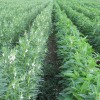
Israeli scientist wins innovation award for increasing the ancient crop's yield, size and nutrition profile. Dr Zvi Peleg developed an improved sesame cultivar with bigger seeds, more seeds per pod and better bioavailability of the nutrients in the seeds. He and his team are also working to make sesame pods that can be picked by machine rather than by hand. Even though sesame has been cultivated for some 5,500 years, the crop has traditionally been unprofitable because it is difficult to harvest and produces a low yield.

Researchers are seeking regulatory approval for a peptide that can kill bacteria – whether throughout a hospital or inside a milk carton
In the future, food companies might be able to store products like milk in miracle containers that kill or at least delay the development of bacteria inside. Experiments are underway at Hebrew University’s Faculty of Agriculture to produce a so-called bioactive milk carton to extend products’ shelf lives.

Prof. Ido Braslavsky is working on ways to freeze hearts, livers, and kidneys
“Perfecting cryopreservation – the process of preserving cells, tissues and organs in sub-zero temperatures – would enable long-term banking of tissues and organs and efficient matching between donor and patient, eventually saving lives of millions of people around the world,” said Braslavsky.
The research he and his team are doing on ice-binding proteins – the same proteins that allow fish, animals, and even bacteria to survive in the Antarctic – could solve the problem, said Braslavsky
http://www.timesofisrael.com/hebrew-u-ice-tech-could-end-organ-transplan...
http://phys.org/news/2016-03-scientists-ice-banking.html


Desalination can dramatically increase the prevalence of inadequate iodine intake, new research suggests. An estimated 300 million people worldwide rely on over 17,000 desalination plants in 150 countries for water, and the numbers are likely to grow. Israel has highest use of desalinated water in world; severe iodine shortage has been linked to mental retardation Faculty researchers say that Israeli adults who consume desalinated water were found in a study to have a “surprisingly high” prevalence of inadequate iodine intake and a related thyroid dysfunction.
http://www.timesofisrael.com/study-says-desalination-may-cause-iodine-deficiency/
https://www.sciencedaily.com/releases/2016/09/160919084610.htm


Yissum's Aggrinovation is raising $6 million to advance agritech technologies and agricultural startups.

![By Jerzy Opioła (Own work) [GFDL (http://www.gnu.org/copyleft/fdl.html) or CC BY-SA 4.0-3.0-2.5-2.0-1.0 (http://creativecommons.org/licenses/by-sa/4.0-3.0-2.5-2.0-1.0)], via Wikimedia Commons](https://en.hafakulta.agri.huji.ac.il/sites/default/files/styles/os_square_100_100/public/agri/files/512px-petunia_x_hybrida_a1.jpg?m=1663322883&itok=rlna9ghV "512px-petunia_x_hybrida_a1.jpg")
Faculty student discovers that as temperatures rise, the color and scent mechanism of petunias, at least, suffers mightily.

Bees Diversify Diet to Take the Sting Out of Nutritional Deficiencies
New research shows that honey bees forage for a diet that balances their colony’s specific nutritional deficits. While pesticides and pathogens pose clear threats to honey bee health, the need of bee colonies for balanced nutrition is gaining increasing appreciation. As colonies are kept in agricultural areas for crop pollination, they may encounter nutritional deficits when foraging predominantly on one pollen source.
"This research indicates that honey bee colonies strive to balance their nutrition if appropriate floral resources are available. Bee colonies can benefit by this type of resilience when food options are sparse, for instance at certain sites or in seasons of dearth. Since alternative floral resources can help bees to balance their nutritional needs, this should serve as an incentive for everyone to plant flowers, wherever and whenever they can," said Dr. Harmen Hendriksma.
"Our research with bees continues to reveal their remarkable abilities. Honey bee colonies must maintain a balanced diet for optimal health, and bee foragers seem to have evolved the sophisticated ability to bias their efforts towards finding food that balances the colony's nutritional deficiencies. In so doing they remind us that in nutrition, as in many other things, maintaining the proper balance is key," said Prof. Sharoni Shafir.
https://www.sciencedaily.com/releases/2016/04/160413084523.htm
https://www.eurekalert.org/pub_releases/2016-04/thuo-bdd041316.php
videos at: https://youtu.be/WqbDrAJjRkQ and https://youtu.be/YyTKbRd2uWQ.


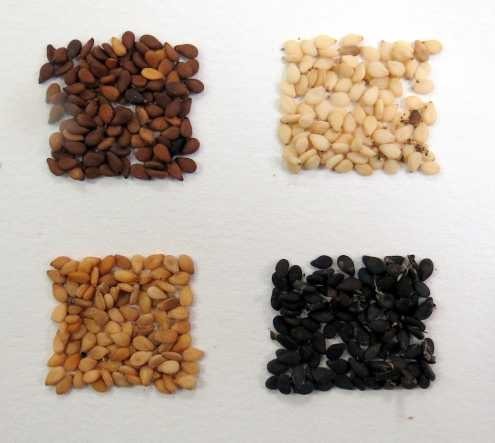
Kaye Innovation Award for recognizing sesame's value to a hungry planet
By screening more than 100,000 sesame seed variants, Dr. Zvi Peleg has found a way to develop a new elite sesame cultivar with enhanced yield and seed quality suitable for modern agricultural practice. Peleg is a senior lecturer at the Hebrew University's Robert H. Smith Institute of Plant Sciences and Genetics in Agriculture
.

The Emet Prize in Life Sciences and Agriculture is awarded to Prof. Dani Zamir for his groundbreaking research of the genetic control of complex quantitative traits and the application of his studies to plant breeding.


![By Jerzy Opioła (Own work) [GFDL (http://www.gnu.org/copyleft/fdl.html) or CC BY-SA 4.0-3.0-2.5-2.0-1.0 (http://creativecommons.org/licenses/by-sa/4.0-3.0-2.5-2.0-1.0)], via Wikimedia Commons](https://en.hafakulta.agri.huji.ac.il/sites/default/files/styles/os_files_large/public/agri/files/512px-petunia_x_hybrida_a1.jpg?m=1663245625&itok=sahCvtzW)