New tool predicts which compounds taste bitter
Journal club article in PNAS about BitterPredict, a machine learning tool that predicts whether a chemical tastes bitter. BitterPredict was developed by members of Prof Masha Niv's lab.
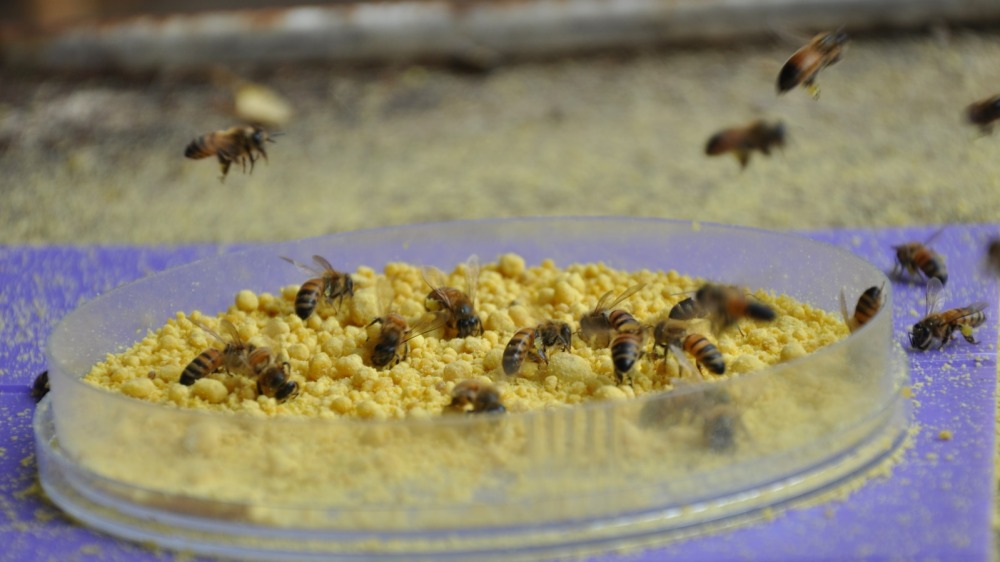
They cannot simply choose pollen from flowers high in omega-3 because increasing urbanization has decimated many kinds of wildflowers. The resulting nutritional imbalance is a major reason why honeybees, responsible for the pollination of more than 90 commercial food crops across the world, are dying at an alarming rate.
What do you get when you combine the strongest materials from the plant world with the most elastic ones from the insect kingdom? Super-performing materials that might transform ... everything. Nanobiotechnologist Prof. Oded Shoseyov of our Faculty walks us through examples of amazing materials found throughout nature, in everything from cat fleas to sequoia trees, and shows the creative ways his team is harnessing them in everything from sports shoes to medical implants.
The genome sequence of wild emmer wheat was determined by an international group of scientists headed by Dr Assaf Distelfeld. Wild Emmer wheat is the original form of nearly all the domesticated wheat in the world, including durum (pasta) and bread wheat. Wild emmer is too low-yielding to be of use to farmers today, but it contains many attractive characteristics that are being used by plant breeders to improve wheat.
Dr Zvi Peleg of the Faculty's Institute of Plant Sciences and Genetics took part in the research.
Dr Distelfeld and Dr Gil Ronen began their careers with studies at the Faculty.
Our congratulations to all!
"In first-of-its-kind research, a 10-member international team of scientists, led by Maor Matzrafi of the Hebrew University of Jerusalem, Ittai Herrmann from Ben-Gurion University of the Negev, and UC Davis agricultural entomologist Christian Nansen, used hyperspectral technologies to successfully predict the viability of the weed seeds and herbicide response. The research, published in the current edition of Frontiers of Plant Science, (here) offers growers of cotton, soybean, corn, watermelon and other crops a new tool in their toolbox to thwart the growth of the herbicide-resistant Palmer amaranth, a fast-growing and highly aggressive weed which cripples crop yields."
62% of school-age children and 85% of pregnant women in Israel have low iodine intakes, according to the country's first national iodine survey. Government funding and legislation, and a government-regulated program of salt or food iodization, are essential to reducing the deficiency, which poses a high risk of impaired neurological development.
From left, researchers Dov Gefel, Yaniv Ovadia, Aron Troen and Jonathan Arbelle
https://www.sciencedaily.com/releases/2017/03/170327083438.htm
Smart pest management for fruit, nut and grape growers
FieldIn’s software helps commercial farmers eliminate spraying mistakes, reducing the number of sprays and overall use of pesticides on their crops. By Abigail Klein Leichman, Israel21c - "Controlling pests with minimal spraying is a difficult balancing act for commercial growers. And surprisingly, they don’t have a reliable mechanism to assure that the right quantity reaches every tree or vine; some may be missed or over-sprayed. Israeli ag-tech startup FieldIn innovated an end-to-end pest-management software to achieve that balance with input from innovative tractor hardware and a host of agronomic data....."
The Yissum Research Development Company, the technology transfer arm of the Hebrew University of Jerusalem, has come up with an environmentally-friendly, biological solution for purifying contaminated water. The invention uses bacteria as novel biofilters to reduce nitrate levels in water sources.
Faculty researchers Eyal Ert, Aliza Fleischer and Nathan Magen had 600 people rate photos of Airbnb hosts in Stockholm. They found that being attractive upped the price people were willing to pay for a room, especially for female hosts. Trustworthy looking hosts with bad user reviews were able to demand higher prices than less trustworthy-looking competitors.
http://www.forbes.com/sites/keithwagstaff/2016/04/25/secret-to-a-higher-...
http://www.sciencedirect.com/science/article/pii/S0261517716300127
Limiting carbs to dinner-time increases satiety, reduces risk for diabetes and cardiovascular disease. An experimental diet with carbohydrates eaten mostly at dinner could benefit people suffering from severe and morbid obesity, according to new research at the Hebrew University of Jerusalem.
The diet influences secretion patters of hormones responsible for hunger and satiety, as well as hormones associated with metabolic syndrome. In this way the diet can help dieters persist over the long run, and reduce risk factors for diabetes and cardiovascular disease. The research was carried out by research student Sigal Sofer under the auspices of Prof. (Emeritus) Zecharia Madar.
http://nocamels.com/2012/11/wait-what-eating-carbs-at-night-could-benefi...http://nocamels.com/2012/11/wait-what-eating-carbs-at-night-could-benefit-obese-people/
An experimental diet with carbohydrates eaten mostly at dinner could benefit people suffering from severe and morbid obesity, according to new research at the Hebrew University of Jerusalem.
The diet influences secretion patters of hormones responsible for hunger and satiety, as well as hormones associated with metabolic syndrome. In this way the diet can help dieters persist over the long run, and reduce risk factors for diabetes and cardiovascular disease.
The research was carried out by research student Sigal Sofer under the auspices of Prof. (Emeritus) Zecharia Madar, at the Institute of Biochemistry, Food Science and Nutrition at the Hebrew University's Robert H. Smith Faculty of Agriculture, Food and Environment. (Prof. Madar is now Chief Scientist at Israel’s Ministry of Education.)
Sofer randomly assigned 78 police officers to either the experimental diet (carbohydrates at dinner) or a control weight loss diet (carbohydrates throughout the day). 63 subjects finished the six-month program.
The researchers examined the experimental diet's effect on the secretion of three hormones: leptin, considered to be the satiety hormone, whose level in the blood is usually low during the day and high during the night; ghrelin, considered the hunger hormone, whose level in the blood is usually high during the day and low during the night; and adiponectin, considered the link between obesity, insulin resistance and the metabolic syndrome, whose curve is low and flat in obese people.
''The idea came about from studies on Muslims during Ramadan, when they fast during the day and eat high-carbohydrate meals in the evening, that showed the secretion curve of leptin was changed,” explained Prof. Madar.
The researchers found that the innovative dietary manipulation led to changes in daylight hormonal profiles in favor of the dieters: the satiety hormone leptin’s secretion curve became convex during daylight hours with a nadir in the late day; the hunger hormone ghrelin’s secretion curve became concave, peaking only in the evening hours; and the curve of adiponectin, considered the link between obesity, insulin resistance and the metabolic syndrome, was elevated. At the same time this dietary pattern led to lower hunger scores, and better anthropometric (weight, abdominal circumference and body fat), biochemical (blood sugar, blood lipids) and inflammatory outcomes compared to the control group.
The findings suggest there is an advantage in concentrating carbohydrate intake in the evening, especially for people at risk of developing diabetes or cardiovascular disease due to obesity. ''The findings lay the basis for a more appropriate dietary alternative for those people who have difficulty persisting in diets over time,'' said Prof. Madar. ''The next step is to understand the mechanisms that led to the results obtained.''
The study was published in two continuous papers: ''Greater weight loss and hormonal changes after 6 months diet with carbohydrates eaten mostly at dinner'' (published in Obesity) and ''Changes in daily leptin, ghrelin and adiponectin profiles following a diet with carbohydrates eaten at dinner in obese subjects'' (published in Nutrition, Metabolism & Cardiovascular Diseases).
Sources of support for the study include Meuhedet Medical Services, Israel; the Israeli Police Force; the Kaplan Medical Center in Rehovot, Israel (for Dr. Fink); the Israel Diabetes Association; and the Israel Lung and Tuberculosis Association (for Prof. Eliraz).

Leafy greens decay rapidly, but a new technology developed by Dr Rivka Elbaum can extend shelf life by delaying senescence. The simple and cost-effective treatment involves dipping the leaves into a solution. The solution is a permitted food additive and may even have beneficial effects on human health.
http://www.timesofisrael.com/new-solution-to-keep-veggies-fresh-for-a-month-sans-fridge/
On the left, a pepper and lettuce leaf treated with the new solution after a week without refrigeration; on the right, untreated produce (Photo credit; Courtesy)
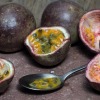
Two Hebrew University scientists say a strain of passionfruit they have developed appears to contain effective antioxidants to prevent brain decay as people age. Prof. Alon Samach, professor of horticulture and Dr. Aron Troen, professor of nutritional neuroscience, say the new variety, code named “Dena,” has shown the ability to reduce oxidation damage in the brains of test animals and could show promise against the age-related breakdown sometimes implicated in conditions like Alzheimer’s or Parkinson’s diseases.
Cold-loving microbes from Antarctica produce an “uncharacteristically powerful” antifreeze, using it like a grappling hook to grab onto ice rather than stop it from forming. This Atlantic article describes how Faculty scientists Maya Bar Dolev and Ido Braslavsky collaborated with Peter Davies of Queens University to see just how they do it.
The Counterintuitive Way That Microbes Survive in Antarctica and what it could mean for the search for life on other world
By Andrew Friedman, Tazpit News Agency
Most people may consider the southern tip of the world little more than a frozen wasteland, but Dr. Ido Braslavsky, an associate professor at the Hebrew University’s Robert H. Smith Faculty of Agriculture, food and environment in Rehovot, would take issue with that assertion.
... Braslavsky says that scientists have known for many years that many cold-water plants, fish, insects, and microorganisms produce anti-frost proteins, a sort of natural “antifreeze” that helps them survive at frigid temperatures that would kill other organisms. But he says that the antifreeze protein that is found on a particular marine bacterium that lives under the ice in Antarctica is hundreds of times larger than in other samples found other organisms farther to the north That allows it to stick to the ice layer that covers the lake throughout the year without freezing.